Every child develops at their own pace. Some children begin speaking early, while others take more time to find their words. Some are eager to run, jump and climb, while others need additional support to develop their movement and coordination skills.
As parents, it’s natural to wonder whether your child is reaching important developmental milestones.
You might notice that your child has difficulty communicating their needs, joining group activities, managing big emotions or keeping up with everyday routines. Perhaps a teacher has raised concerns, or you’ve noticed differences between your child’s development and that of other children their age.
While developmental differences don’t always indicate a delay or difficulty, they can be a reason to explore whether additional support may be helpful.
This is where early intervention comes in.
Early intervention provides children and families with targeted support during important stages of development. Rather than waiting for challenges to become more significant, it focuses on understanding a child’s needs and helping them develop the skills to participate more confidently in everyday life.
What Is Early Intervention?
Early intervention refers to services and support designed to help young children who are experiencing developmental delays, disabilities or difficulties in one or more areas of development.
These areas may include:
- Communication and language: Understanding others, expressing needs and developing speech and language skills.
- Motor development: Building strength, balance, coordination and movement skills.
- Social interaction: Connecting with others, engaging in shared activities and developing relationships.
- Emotional regulation: Recognising feelings and developing ways to manage emotions.
- Cognitive and learning skills: Developing attention, memory, problem-solving and early learning abilities.
- Daily living skills: Building independence with dressing, feeding, toileting and everyday routines.
Early intervention is not simply about helping children reach milestones faster.
It is about understanding each child’s unique developmental profile and providing the right support to help them learn, communicate, participate and develop greater independence.
For some children, this may involve a specific therapy. For others, a combination of educational and therapeutic support may be beneficial.
Why Is Early Intervention So Important?
1. Early Childhood Is a Critical Period for Brain Development
During the early years, a child’s brain develops rapidly, forming and strengthening connections through everyday experiences, relationships and learning opportunities.
This ability of the brain to adapt and reorganise is known as neuroplasticity.
Early childhood provides valuable opportunities to develop foundational skills through play, movement, communication and social interaction.
For example, when a child plays a simple turn-taking game, they may be practising several skills at once:
- Paying attention to another person
- Waiting and taking turns
- Understanding simple instructions
- Communicating wants and ideas
- Managing excitement or frustration
These everyday interactions help create foundations for more complex learning and participation.
Early intervention builds on these opportunities by providing structured, individualised support where a child may need additional help.
Starting early can make it possible to address emerging difficulties while important developmental skills are still taking shape.
However, this doesn’t mean that opportunities for progress disappear as children grow older. Children can continue to learn and develop at every age.
2. It Helps Address Developmental Challenges Before They Become Bigger Barriers
Some developmental difficulties become more noticeable as children encounter new expectations.
For example, a child who finds it difficult to understand instructions may manage relatively well during unstructured play. But when they enter preschool and need to follow group directions, participate in classroom routines or communicate with peers, those difficulties may become more apparent.
Similarly, a child with challenges in balance, coordination or fine motor control may find certain playground activities, handwriting tasks or self-care routines more demanding.
Early intervention helps identify these areas of difficulty and provides opportunities to practise relevant skills.
This may help reduce the impact of developmental challenges on everyday activities and learning.
It also allows families and educators to make helpful adjustments to a child’s environment, expectations and support strategies.
3. It Builds Important Foundations for School Readiness
School readiness is about much more than recognising letters, counting numbers or knowing colours.
Children also need a range of developmental skills to participate in a classroom environment.
These include:
- Following simple and multi-step instructions
- Maintaining attention during activities
- Managing transitions between routines
- Communicating with teachers and classmates
- Participating in group learning
- Developing fine motor skills for classroom tasks
- Managing emotions and asking for help
- Building independence in everyday routines
A child may be academically capable but still find the demands of a structured classroom challenging.
Early intervention can support the underlying skills that help children access learning and participate alongside their peers.
At KidsFirst, our School Readiness and Bridging Readiness programmes focus on helping children develop important skills for classroom participation, learning and independence.
The goal is not simply to prepare children academically, but to support their ability to engage meaningfully in a school environment.
4. It Supports Communication and Social Development
Communication plays an important role in almost every part of a child’s day.
Children use communication to express what they want, share experiences, ask questions, make choices and connect with others.
When communication is difficult, children may become frustrated because they cannot easily express themselves or understand what is expected of them.
Early Speech and Language Therapy may support children in developing skills such as:
- Understanding and following directions
- Expanding vocabulary
- Using words, gestures or other communication methods
- Building sentences
- Engaging in back-and-forth interactions
- Developing play and social communication skills
For children who benefit from additional social support, structured play and guided interactions can also provide opportunities to practise connecting with peers.
Importantly, communication support should be tailored to each child’s needs and may include spoken language, gestures, visuals or augmentative and alternative communication (AAC).
The aim is to help children communicate effectively in ways that work for them.
5. It Encourages Independence in Everyday Life
For young children, everyday activities such as getting dressed, eating, washing hands or packing away toys involve many different developmental skills.
What may appear to be a simple routine can require coordination, motor planning, attention, sensory processing and the ability to follow instructions.
For children who find these activities challenging, Occupational Therapy and other developmental support services may help them build practical skills.
For example, therapy may focus on:
- Developing fine motor coordination for dressing and manipulating objects
- Supporting participation in feeding and self-care routines
- Building sensory regulation strategies
- Improving motor planning and body awareness
- Practising daily routines with appropriate support
Progress may look different for every child.
For one child, it might mean learning to hold a spoon more comfortably. For another, it could mean participating in a dressing routine with fewer prompts or communicating when they need assistance.
These everyday achievements can make a meaningful difference to a child’s participation and independence.
6. It Helps Parents Better Understand and Support Their Child
Early intervention is not only about supporting the child.
It also helps parents and caregivers understand their child’s strengths, needs and developmental differences.
Parents often have questions such as:
Why does my child struggle with transitions?
How can I help when my child becomes overwhelmed?
What activities should we practise at home?
How can I support my child’s communication without putting too much pressure on them?
Working with a multidisciplinary team can help families explore these questions and develop practical strategies that fit their daily routines.
This might involve adapting the environment, using visual supports, adjusting instructions or finding new ways to encourage participation through play.
When parents and therapists work together, children have more opportunities to practise relevant skills beyond therapy sessions.
What Are the Signs That a Child May Benefit from Early Intervention?
Every child’s developmental journey is different, and one behaviour or delayed milestone does not automatically mean a child has a developmental disorder.
However, it may be helpful to seek professional guidance if you notice ongoing difficulties in areas such as:
| Developmental area | Possible signs to discuss with a professional |
| Speech and language | Difficulty understanding instructions, communicating needs or developing expected language skills |
| Motor skills | Frequent difficulties with balance, coordination, movement or age-appropriate physical activities |
| Fine motor and self-care | Challenges with manipulating objects, dressing, feeding or other daily routines |
| Social communication | Difficulty engaging in back-and-forth interactions or participating in social activities |
| Emotional and sensory regulation | Frequent overwhelm or difficulty managing everyday sensory and emotional demands |
| Attention and learning | Persistent difficulties participating in activities, following routines or engaging in learning tasks |
These signs are not a diagnostic checklist. Their significance depends on the child’s age, developmental history and circumstances.
If your child has lost skills they previously had, such as language or motor abilities, seek a prompt assessment from a healthcare professional.
You do not need to wait until your child starts school to ask questions about their development.
If something concerns you, speaking with your child’s paediatrician or an appropriate developmental professional is a useful first step.
Does My Child Need a Diagnosis Before Starting Early Intervention?
Not necessarily.
Some children begin receiving developmental support while assessments are ongoing, while others access services based on identified functional needs.
A formal diagnosis may be required for certain programmes, funding arrangements or specialised services, but it is not always necessary to begin discussing a child’s developmental concerns with professionals.
The most important starting point is understanding:
- What your child is finding difficult
- What strengths and interests they already have
- How those difficulties affect everyday participation
- What support may be appropriate for their needs
An assessment can help clarify your child’s developmental profile and guide decisions about suitable intervention.
What Does Early Intervention Look Like at KidsFirst Singapore?
At KidsFirst, we recognise that children develop in different ways and may benefit from different types of support.
Our multidisciplinary approach brings together educational and therapy professionals to support children’s development across learning, communication, movement and everyday participation.
Depending on a child’s individual needs, support may include:
Occupational Therapy (OT)
Helping children develop skills related to fine motor coordination, sensory processing, self-care, motor planning and participation in everyday activities.
Speech and Language Therapy (SLT)
Supporting speech, language, communication, social interaction and functional communication skills.
Physiotherapy (PT)
Supporting gross motor development, strength, balance, coordination, mobility and participation in physical activities.
Educational and Early Intervention Support
Providing structured learning experiences that support attention, early learning, school readiness, social participation and independence.
Collaborative, Individualised Support
Children may benefit from a combination of services, depending on their developmental needs and goals.
Our team works with families to explore suitable support options and create meaningful opportunities for learning and development.
How Can Parents Support Early Development at Home?
While professional support can be valuable, everyday family routines also provide opportunities for children to learn.
Here are five simple ways to encourage development at home.
1. Make time for play
Play supports communication, movement, problem-solving and social interaction. Follow your child’s interests and create opportunities for shared enjoyment.
2. Talk, listen and respond
Describe everyday activities, respond to your child’s communication attempts and allow time for them to express themselves in their preferred way.
3. Encourage movement
Outdoor play, climbing, walking, dancing and age-appropriate movement activities can provide opportunities to practise coordination and body awareness.
4. Build predictable routines
Consistent routines and visual supports can help children understand what comes next and participate more independently.
5. Celebrate individual progress
Development is not a race. Notice the small achievements that matter to your child and family, whether that is trying something new, communicating a need or participating in an activity with greater confidence.
If your child is already receiving therapy, ask their therapist which activities and strategies are most appropriate to practise at home.
Frequently Asked Questions About Early Intervention
At what age should early intervention begin?
Early intervention can begin when developmental concerns are identified, including during infancy or the toddler years. The appropriate timing and type of support depend on the child’s needs. There is no need to wait for school age if concerns are already present.
Is early intervention only for children with autism?
No. Early intervention may support children with a wide range of developmental needs, including communication difficulties, motor delays, learning challenges, developmental disabilities and other areas affecting everyday participation.
Can early intervention help with school readiness?
Yes. Early intervention may help children develop foundational skills such as communication, attention, emotional regulation, motor coordination and independence that are important for participating in school.
How long does a child need early intervention?
There is no single timeline. Some children benefit from short-term targeted support, while others may require ongoing or changing levels of assistance. Progress and goals should be reviewed regularly with the family.
What if I’m not sure whether my child needs support?
You can begin by discussing your concerns with your child’s paediatrician or a qualified developmental professional. An initial consultation or assessment can help determine whether further evaluation or intervention may be useful.
Early Support Can Make a Meaningful Difference
Every child deserves opportunities to learn, communicate, participate and develop in ways that recognise their individual strengths and needs.
Early intervention is not about rushing development, comparing children or expecting every child to follow the same path.
It is about recognising when additional support may be helpful and creating opportunities for children and families to build important skills.
Whether your child is working towards communicating their needs, participating in classroom routines, managing emotions or becoming more independent, each step forward matters.
And when the right support begins early, it can help create stronger foundations for the years ahead.
Wondering If Early Intervention Could Support Your Child?
At KidsFirst Singapore, our multidisciplinary team supports children and families through individualised therapy, early intervention and learning programmes.
If you have questions about your child’s development or would like to explore the support available, we’re here to help.
Get in touch with KidsFirst to discuss your child’s needs.
📱 WhatsApp: +65 9166 5597
📧 Email: support@kidsfirst.co
🌐 Website: https://kidsfirst.co/
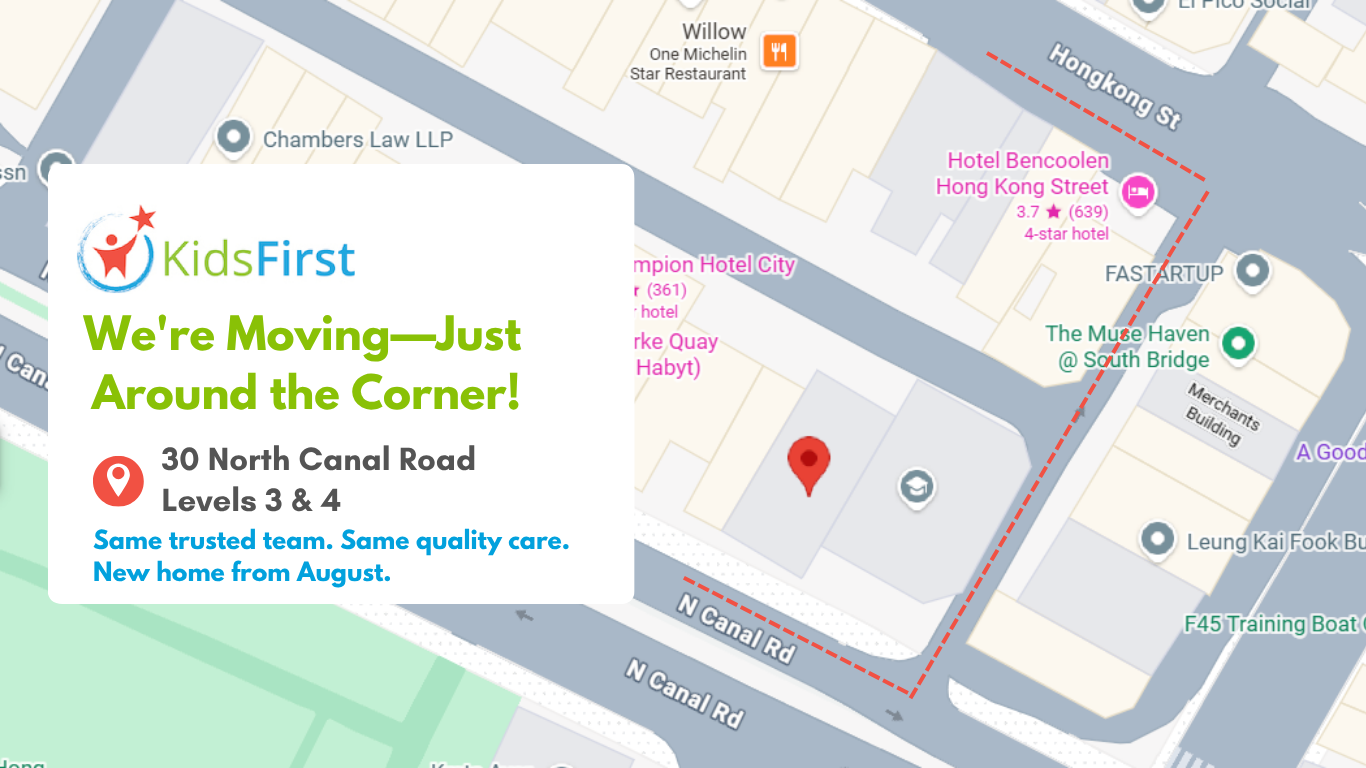
📍 Location: 30 North Canal Road, Levels 3 & 4, Singapore
Every Child. Every Milestone. Every Step Forward.