
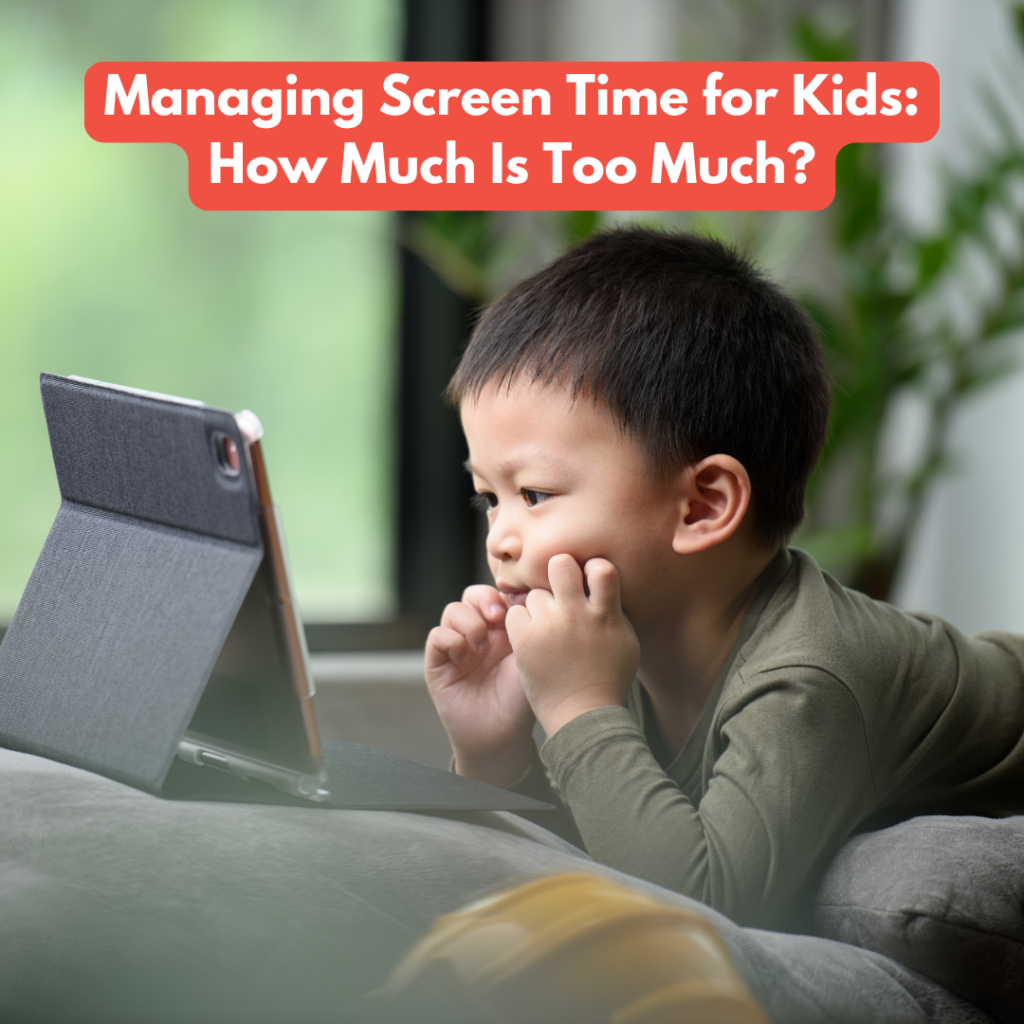
Screens are part of everyday life. From online learning and video calls with family to educational apps and entertainment, technology has become an important part of childhood.
As parents, it can sometimes be difficult to know where to draw the line. How much screen time is too much? And how can we encourage healthy habits without turning every device into a daily battle?
The good news is that it’s not just about how long children spend on screens—it’s also about how they use them and how technology fits into a balanced lifestyle.
Screen Time Isn’t All the Same
Not all screen time has the same impact.
A child attending an online lesson, video chatting with grandparents, or creating digital artwork is having a very different experience from spending hours passively watching videos.
Instead of focusing only on the number of minutes, consider asking:
- Is my child actively learning or simply consuming?
- Is the content appropriate for their age?
- Are they interacting with others?
- Is screen time replacing important activities like sleep, movement, play, or family time?
Quality often matters just as much as quantity.
Signs Your Child May Need a Break
Every child is different, but too much screen time can sometimes affect behaviour, learning, and wellbeing.
You may notice your child:
- Becoming upset or angry when it’s time to stop
- Losing interest in outdoor play or favourite hobbies
- Having difficulty concentrating
- Becoming more irritable or emotionally reactive
- Struggling to fall asleep
- Complaining of tired eyes or headaches
- Spending less time interacting with family or friends
If these behaviours become frequent, it may be worth reviewing your family’s screen habits.
Why Balance Matters
Children learn best through a variety of experiences.
Alongside screen time, they also need opportunities to:
- Move their bodies
- Solve real-world problems
- Create and imagine
- Read and explore books
- Build friendships
- Have conversations
- Play outdoors
These activities help develop communication, motor skills, social understanding, emotional regulation, creativity, and executive functioning in ways that screens alone cannot provide.
Practical Tips for Healthy Screen Habits
Create Screen-Free Times
Choose regular times when the whole family puts devices away, such as:
- During meals
- Before bedtime
- During family outings
- While completing homework
Consistent routines are often easier than making decisions in the moment.
Encourage Active Play First
Before reaching for a device, encourage activities such as:
- Building with blocks
- Drawing or colouring
- Playing outside
- Reading together
- Helping with simple household tasks
These experiences support learning while also building confidence and independence.
Watch Together
Whenever possible, join your child during screen time.
Watching together creates opportunities to:
- Ask questions
- Explain new ideas
- Encourage conversation
- Build language skills
- Help children think critically about what they see
Shared screen time can become a valuable learning experience.
Model Healthy Habits
Children learn by watching the adults around them.
If parents regularly put their phones away during meals, conversations, and family activities, children are more likely to develop healthy technology habits too.
What About Neurodivergent Children?
For some children, including autistic children or those with ADHD, screens can provide comfort, predictability, and opportunities for learning or communication.
Rather than removing screens completely, it is often more helpful to consider:
- What purpose does the screen serve?
- Is it helping my child regulate or learn?
- Are there opportunities to build balance throughout the day?
Every child is unique, and strategies should be tailored to their individual needs and strengths.
When Screen Time Becomes a Daily Struggle
If your child becomes extremely distressed when screens are removed or finds it difficult to transition to other activities, it may be related to underlying challenges such as:
- Emotional regulation
- Executive functioning
- Sensory processing
- Communication
- Difficulty with transitions
Understanding the reason behind the behaviour is the first step towards finding effective strategies.
How KidsFirst Can Help
At KidsFirst, our multidisciplinary team works with families to understand the whole child—not just their screen habits.
Depending on your child’s needs, support may include:
- Occupational Therapy to develop emotional regulation, sensory processing, and daily routines.
- Speech & Language Therapy to strengthen communication, social interaction, and play skills.
- Educational Therapy to build executive functioning, organisation, attention, and independent learning skills.
- Physiotherapy to encourage movement, coordination, and physical participation in everyday activities.
Together, we help children develop the skills they need to engage confidently in both the digital and real world.
Final Thoughts
Screens are here to stay—and that’s okay.
The goal isn’t to eliminate technology, but to help children build a healthy relationship with it.
When screen time is balanced with movement, play, learning, social connection, and rest, children are more likely to develop the skills they need to thrive.
Every family will find a different balance, and that’s perfectly normal. The most important thing is creating routines that support your child’s wellbeing, development, and participation in everyday life.
If you’re concerned about how screen time may be affecting your child’s behaviour, learning, or development, the KidsFirst team is here to help. Together, we can identify practical strategies that work for your child and your family.