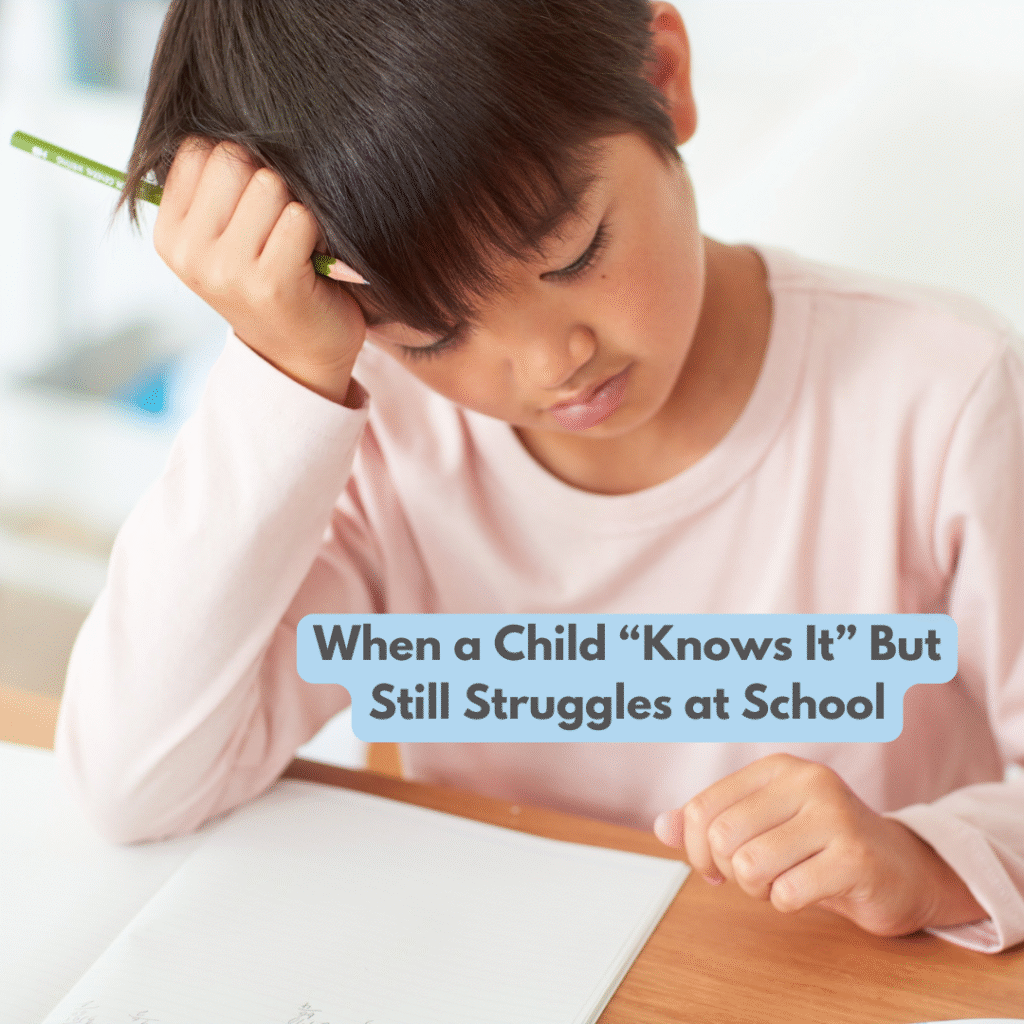
Many parents have experienced this confusing situation:
Your child understands the lesson at home.
They can explain the concept clearly.
But at school, their work doesn’t show what they actually know.
Teachers may say:
“Your child understands the material, but they’re not showing it in their work.”
This can feel frustrating for both parents and children. If a child knows the answer, why do they still struggle?
The answer is often not about intelligence or effort. Instead, it may be related to how children process, organise, and manage information while learning.
Understanding the Gap Between Knowing and Showing
Learning at school requires more than just understanding content. Children must also manage several other skills at the same time.
For example, when completing a task, a child may need to:
- Remember instructions
- Organise their thoughts
- Focus despite distractions
- Write or communicate their ideas clearly
- Manage time and stay on task
These skills are often referred to as executive functioning skills — the brain’s ability to plan, organise, and regulate behaviour during tasks.
When these skills are still developing, children may know the answer but struggle to show it effectively.
Signs Parents May Notice
Children who understand concepts but struggle academically may show signs such as:
- Taking much longer to complete tasks
- Avoiding schoolwork or homework
- Saying “I don’t know” even when they do
- Difficulty starting assignments
- Forgetting instructions
- Becoming frustrated or overwhelmed
- Making careless mistakes
- Difficulty organising written work
These challenges are often misunderstood as laziness or lack of motivation. In reality, many children are working extremely hard just to keep up.
Common Reasons This Happens
Several factors can contribute to this “knowing but not showing” pattern.
Executive Functioning Challenges
Children may struggle with planning, organisation, task initiation, or working memory.
Processing Speed
Some children understand information but need more time to process and respond.
Emotional Pressure or Anxiety
Stress can affect memory, focus, and confidence, especially during tests or assessments.
Language and Communication Skills
A child may understand a concept but find it difficult to express their thoughts clearly.
Attention and Regulation
Difficulty sustaining attention can interfere with completing tasks effectively.
Understanding the underlying reason is key to providing the right support.
Why Confidence Can Be Affected
When children repeatedly experience this gap between knowing and showing, they may begin to doubt themselves.
They might start saying things like:
- “I’m bad at school.”
- “I can’t do this.”
- “I’m just not smart.”
Over time, this can affect motivation and willingness to try.
Early support can help rebuild confidence and teach strategies that make learning more manageable.
How Educational Psychology Can Help
Educational psychologists focus on understanding how children learn and think, rather than simply evaluating academic performance.
Support may include:
- Identifying learning strengths and challenges
- Teaching strategies for organisation and planning
- Improving executive functioning skills
- Supporting emotional regulation and confidence
- Helping children develop independent learning strategies
- Working with parents and teachers to support the child consistently
When children learn how to manage their thinking, they often begin to show the knowledge they already have.
What Parents Can Do at Home
Parents can support their child by:
Breaking tasks into smaller steps
Large tasks can feel overwhelming. Smaller steps help children stay focused.
Using visual supports
Checklists, schedules, and visual reminders can reduce memory demands.
Encouraging effort rather than perfection
Praise persistence and progress, not just correct answers.
Creating predictable routines
Consistent routines help children feel more organised and prepared.
Allowing thinking time
Some children need extra time to process information.
Small adjustments can make learning feel more manageable and less stressful.
Supporting the Whole Child
At KidsFirst, we understand that learning is about more than academics.
Our Educational Psychology services support children in developing the thinking, emotional, and organisational skills needed to succeed in school and everyday life.
By addressing the underlying challenges, we help children build confidence, independence, and a stronger relationship with learning.
Final Thoughts
When a child “knows it” but still struggles at school, it is often a sign that they need support with how they manage learning, not with their ability to understand.
With the right strategies and guidance, children can learn to organise their thoughts, manage challenges, and show the knowledge they already have.
And when that happens, confidence begins to grow.
Learn More
If you would like to learn more about how KidsFirst supports children through Educational Psychology and learning support services, our team would be happy to help.
📩 Contact us to learn more about our programs and consultations.