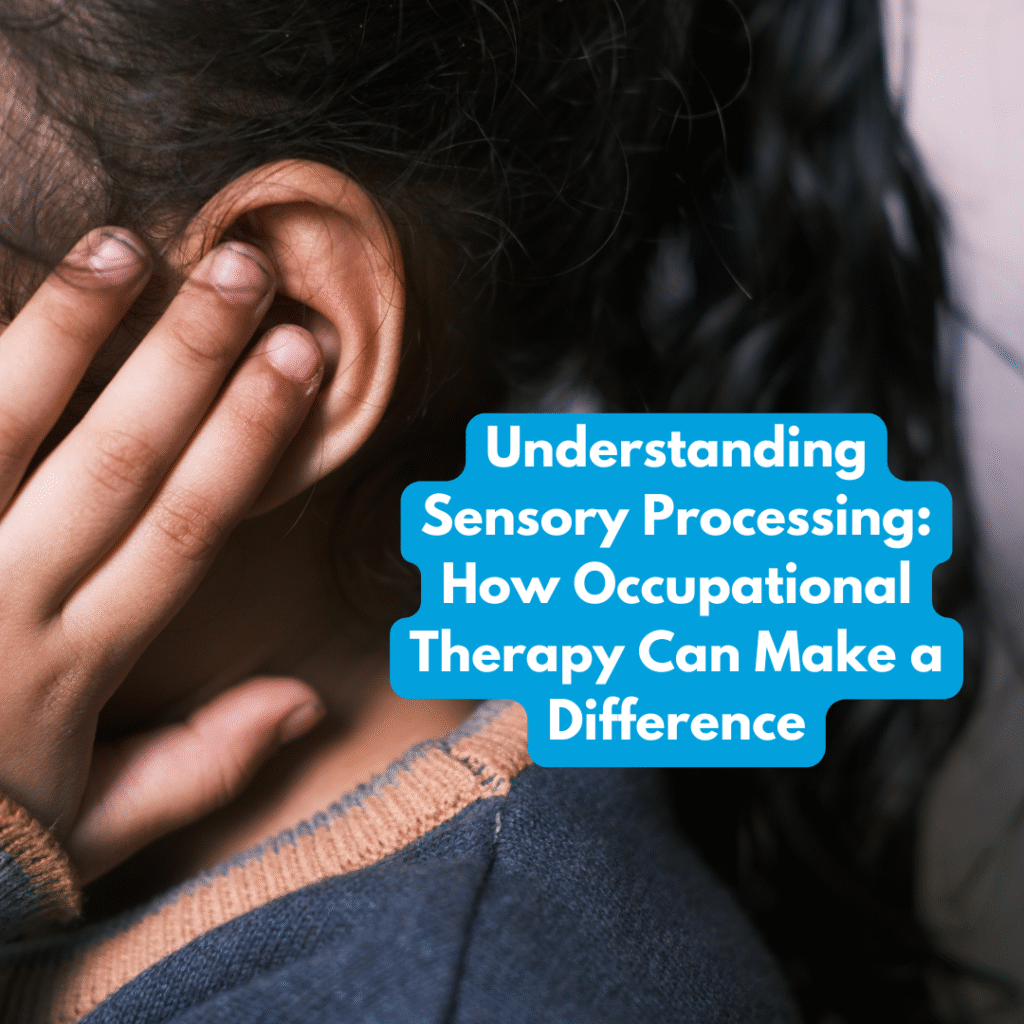
Many parents notice behaviors in their child that are hard to explain. Maybe loud noises cause distress, certain clothing textures lead to meltdowns, or your child constantly seeks movement and pressure. These experiences may be linked to how your child processes sensory information.
Understanding sensory processing can help parents better support their child and seek the right intervention when needed.
What Is Sensory Processing?
Sensory processing refers to how the nervous system receives, interprets, and responds to information from the senses. These senses include touch, sound, sight, taste, smell, movement, and body awareness.
When sensory processing works well, children can respond appropriately to their environment. When it doesn’t, everyday experiences can feel overwhelming, uncomfortable, or confusing.
Common Signs of Sensory Processing Difficulties
Every child is different, but some common signs include:
- Sensitivity to loud sounds, bright lights, or crowded spaces
- Strong reactions to clothing textures, food textures, or touch
- Frequent meltdowns or emotional outbursts
- Difficulty sitting still or staying focused
- Avoidance of messy play or certain activities
- Constant movement, crashing, or seeking pressure
These challenges can affect a child’s participation at home, in school, and during social activities.
Why Sensory Processing Affects Daily Life
Sensory challenges don’t only impact play. They can influence:
- Emotional regulation and behavior
- Attention and learning
- Social interactions with peers
- Daily routines such as dressing, eating, and transitioning between activities
When sensory needs aren’t met, children may feel stressed or dysregulated, even if they can’t express why.
How Occupational Therapy Supports Sensory Processing
Occupational Therapy (OT) plays a key role in helping children better understand and regulate sensory input. At KidsFirst, Occupational Therapists work closely with each child to identify sensory patterns and create individualized support plans.
OT helps children by:
- Improving body awareness and sensory integration
- Teaching strategies for calming, alerting, or organizing the body
- Supporting emotional regulation and attention
- Building tolerance for sensory experiences over time
- Helping children participate more confidently in daily activities
Therapy sessions are purposeful, play-based, and designed to meet children where they are developmentally.
Sensory Regulation Strategies Used in OT
Occupational Therapists may use a combination of approaches, including:
- Movement-based activities to support regulation
- Sensory circuits to prepare the body for learning
- Deep pressure and proprioceptive input for calming
- Visual supports and routines for predictability
- Parent guidance to help transfer strategies to home
The goal is not to change the child, but to help them feel safe, confident, and regulated in their environment.
When Should Parents Seek Support?
If sensory challenges are affecting your child’s ability to learn, play, or cope with daily routines, an Occupational Therapy assessment can provide clarity and guidance. Early support can make a meaningful difference in your child’s comfort, confidence, and independence.
Supporting Your Child’s Sensory Journey
Sensory processing differences are common, and with the right support, children can thrive. Occupational Therapy offers practical tools and strategies that empower both children and families.
At KidsFirst, we believe every child deserves to feel understood, supported, and confident in their world.
If you have concerns about your child’s sensory development, reach out to our team to learn more about Occupational Therapy support.