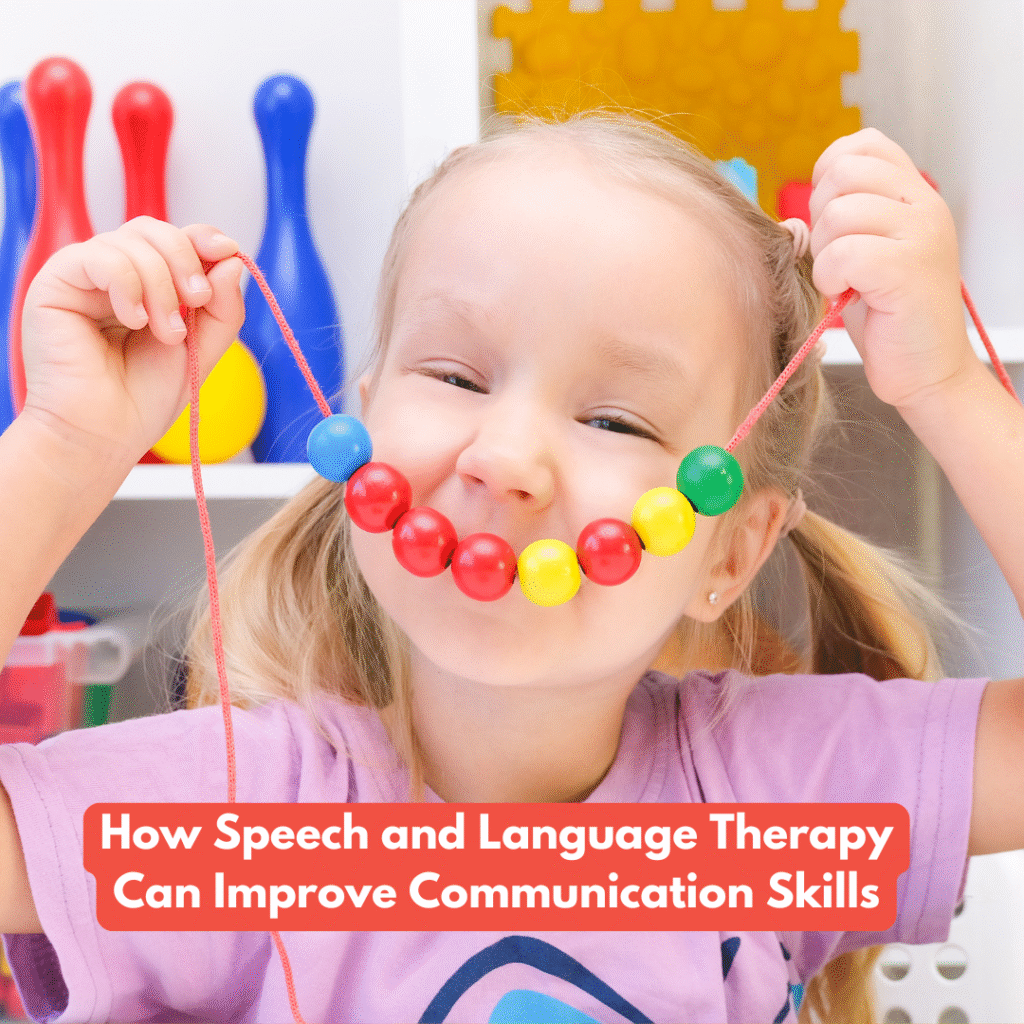
Communication is one of the most powerful tools your child can have—it’s how they connect, express, and make sense of the world. But for some children, finding the right words or understanding others can be a daily challenge. That’s where Speech and Language Therapy (SLT) comes in.
At KidsFirst, our Speech and Language Therapists help children build the foundations of communication—turning frustration into confidence and silence into self-expression.
What Is Speech and Language Therapy?
Speech and Language Therapy focuses on helping children develop essential communication skills such as:
- Speech clarity – pronouncing sounds and words correctly
- Language comprehension – understanding spoken words and instructions
- Expressive language – forming sentences to express thoughts and emotions
- Social communication – using language in play, conversations, and group settings
Therapists assess each child’s strengths and challenges, then create a personalized plan that supports both communication and confidence.
Why Communication Skills Matter
Strong communication isn’t just about talking—it’s about connection. When a child communicates well, they:
- Form stronger relationships with family and peers
- Participate more confidently in school
- Improve self-esteem and independence
- Reduce frustration caused by misunderstandings
Speech and Language Therapy empowers children to find their voice—literally and emotionally.
How Speech Therapy Helps Children Grow
Here are a few ways therapy supports language development:
1. Play-Based Learning
Children learn best through play. Therapists use fun, interactive activities like storytelling, games, and songs to keep sessions engaging while targeting specific goals.
2. Building Confidence in Everyday Settings
Therapists teach practical communication strategies that can be used at home, in school, and with friends. Parents are also guided on how to support speech goals during daily routines.
3. Supporting Nonverbal Communication
For children who find verbal speech difficult, therapists may introduce Augmentative and Alternative Communication (AAC) tools such as picture cards, gestures, or communication devices—ensuring every child can express themselves.
4. Encouraging Listening and Understanding
Speech Therapy also strengthens receptive language—helping children follow instructions, understand stories, and engage meaningfully in conversations.
When to Consider Speech Therapy
Parents often wonder when to seek help. Here are a few signs your child may benefit from Speech and Language Therapy:
- Delayed speech or unclear pronunciation
- Difficulty following directions
- Limited vocabulary or short phrases for their age
- Frustration when trying to communicate
- Trouble interacting with peers or starting conversations
If you notice any of these, early intervention can make a big difference in your child’s long-term communication success.
The KidsFirst Approach
At KidsFirst Singapore, our Speech and Language Therapists work closely with Occupational Therapists, Physiotherapists, and Educators to provide a holistic, multi-disciplinary approach.
Every child receives an Individualized Education Plan (IEP) that aligns therapy goals with their classroom learning and social development—ensuring consistency across all environments.
Conclusion
Speech and Language Therapy is more than just learning to speak clearly—it’s about helping children connect, understand, and thrive. With the right support, every child can find their voice and express their world with confidence.
Ready to help your child communicate with confidence?
Visit our website to learn more or book a consultation with our Speech Therapy team today.