Supporting your child’s learning at home does not mean turning your living room into a classroom or adding pressure to already busy days. In fact, some of the most meaningful learning happens through everyday routines, play, and connection.
Whether your child is in early intervention, school readiness, or primary school, the home environment plays a powerful role in building confidence, independence, and a positive attitude toward learning.
Here are practical, realistic ways parents can support their child’s learning at home without overwhelm.
Create Predictable Routines
Children learn best when they feel safe and regulated. Predictable routines help reduce anxiety and allow children to focus their energy on learning.
Simple routines might include:
- A consistent morning or after-school rhythm
- Regular mealtimes
- A calm bedtime routine
- Set times for play, rest, and learning
Routines do not need to be strict. Even a loose structure helps children understand what to expect and what is expected of them.
Focus on Everyday Learning Opportunities
Learning happens all day, not just during worksheets or homework time.
Everyday moments that support learning include:
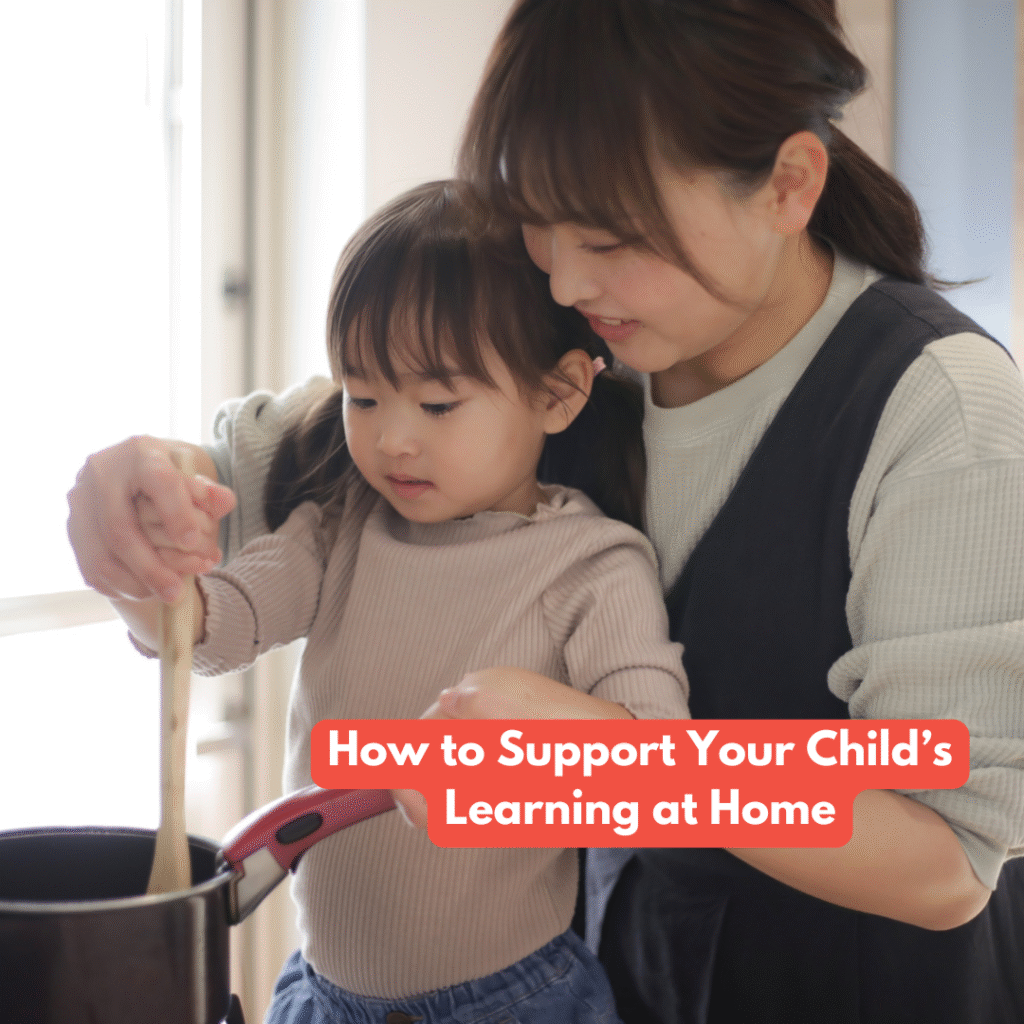
- Cooking together (measuring, sequencing, following instructions)
- Grocery shopping (categorising, counting, decision-making)
- Dressing and self-care (problem-solving and independence)
- Talking about daily activities and feelings
These experiences build language, cognitive skills, and independence naturally.
Encourage Play as a Learning Tool
Play is one of the most powerful ways children learn. Through play, children develop problem-solving skills, creativity, emotional regulation, and social understanding.
Try to offer:
- Open-ended toys (blocks, pretend play items, art materials)
- Time for unstructured play
- Opportunities for movement and sensory play
Play does not need to be educational on the surface to support development. When children are engaged and motivated, learning follows.
Support Communication Through Connection
Strong communication skills grow through everyday interactions, not drills.
You can support communication by:
- Talking through routines (“First we wash hands, then we eat”)
- Giving choices (“Do you want the red cup or blue cup?”)
- Waiting and giving your child time to respond
- Expanding on what your child says (“Yes, that’s a big, blue truck!”)
These small strategies help build language, confidence, and connection.
Keep Expectations Realistic
Every child develops at their own pace. Comparing your child to others or expecting constant progress can create stress for both parent and child.
Instead:
- Celebrate effort, not just outcomes
- Acknowledge small wins
- Focus on progress over perfection
Learning looks different for every child, and that is okay.
Create a Calm Learning Environment
A calm environment supports attention and emotional regulation.
Helpful tips include:
- Reducing background noise during learning tasks
- Keeping materials organised and accessible
- Offering movement breaks when needed
- Creating a quiet space for rest or regulation
Children learn best when their nervous system feels supported.
Work Together With Your Child’s Therapy or School Team
If your child is receiving therapy or attending an early intervention or school readiness programme, collaboration is key.
Ask your child’s team about:
- Strategies you can use at home
- Ways to support current goals
- Simple activities to reinforce skills
Consistency between home and school helps children generalise skills more effectively.
Supporting Learning Is About Connection, Not Pressure
Supporting your child’s learning at home does not require special equipment or long teaching sessions. It is about connection, consistency, and meeting your child where they are.
Small, everyday moments add up. When children feel supported, understood, and encouraged, learning becomes a natural part of daily life.
If you would like guidance on how to support your child’s learning and development, the team at KidsFirst is here to help. Our therapists and educators work closely with families to create strategies that fit into real life.